
A Concrete Win for Bank Swallows
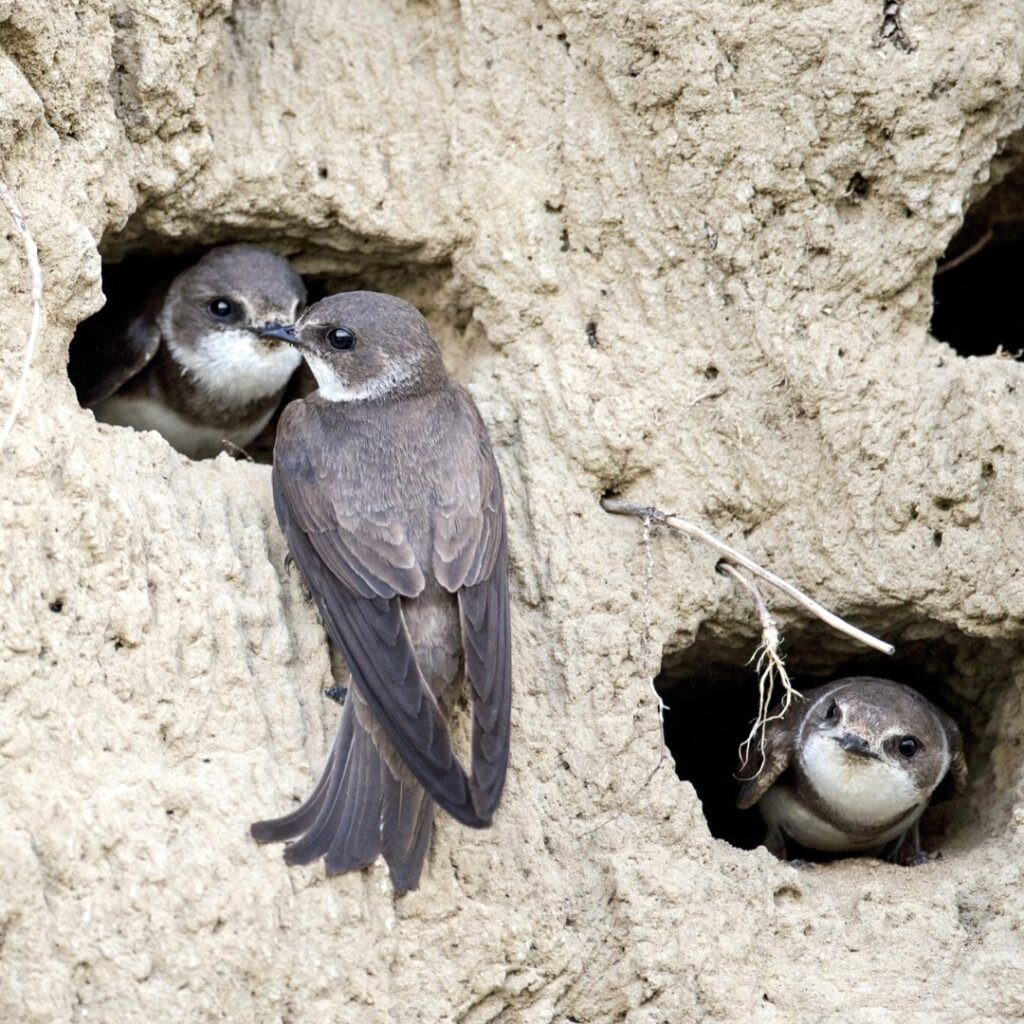
Nesting season is here for birds in the Central Valley, including for bank swallows. These small, sleek flyers are a California State threatened species that are identified in the CVJV’s Implementation Plan as an “at-risk” bird species. CVJV Management Board member River Partners completed a habitat restoration project in November 2024 at Dos Rios State Park that could benefit these swallows.
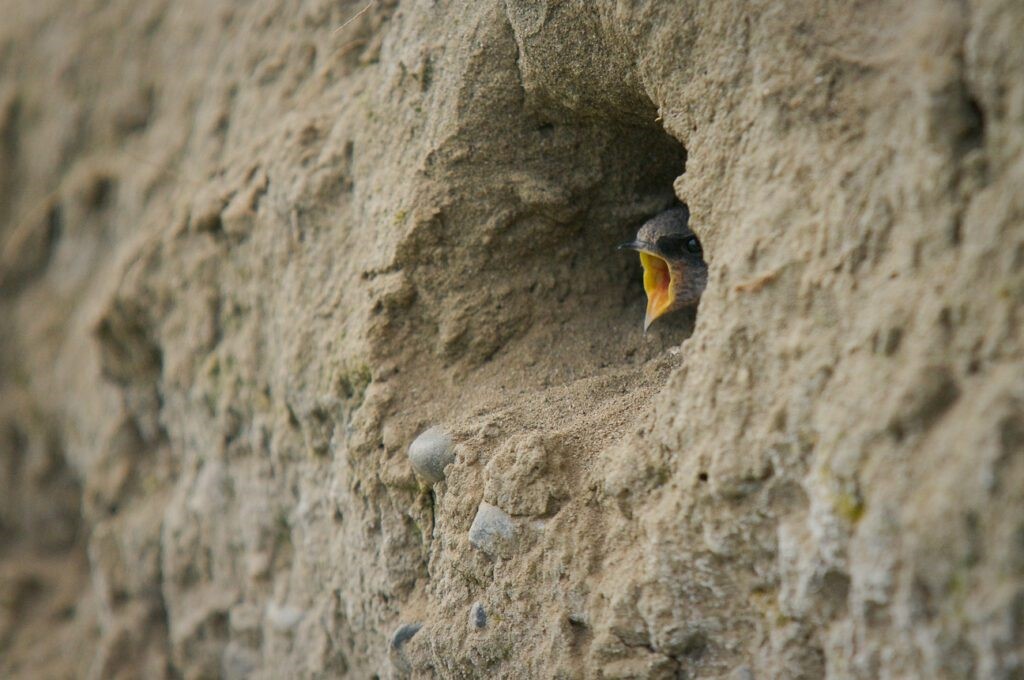
Bank swallows depend on very specific nesting habitat. They excavate burrows in vertical, eroding riverbanks, forming colonies ranging from a handful of nests to several thousand. As the River Partners team noted in an article on their blog about their project, the scientific name for bank swallows, Riparia riparia, translates roughly to “riverbank, riverbank,” reflecting their close tie to rivers. When rock, concrete, or other material is placed along banks to prevent erosion, it eliminates the bare, sandy cliffs these birds need to breed.
In 2024, River Partners removed close to a mile of illegally dumped concrete along the San Joaquin River at Dos Rios State Park near Modesto, demonstrating a legal pathway for clearing unpermitted debris from riverbanks. The project created a replicable model for habitat restoration along rivers where bank swallows have been known to nest.
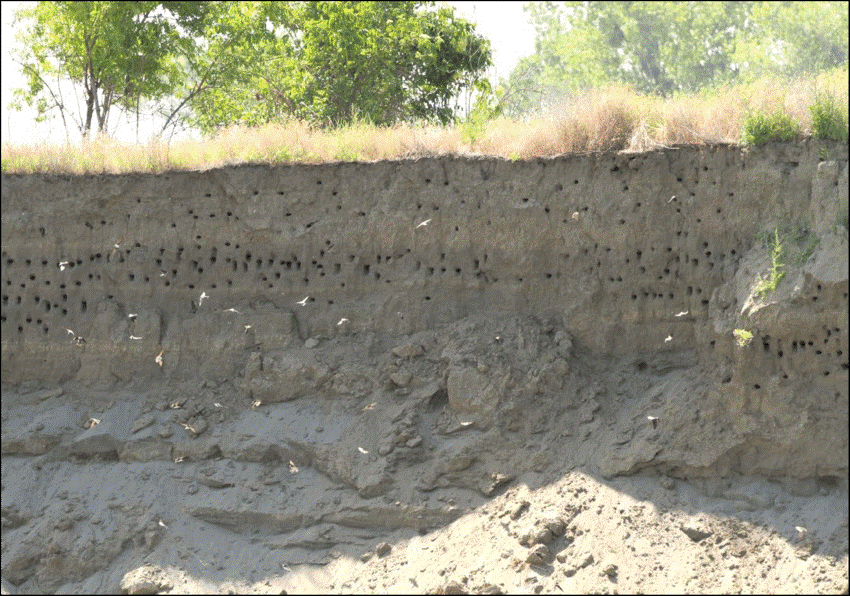
This project’s significance extends well beyond Dos Rios State Park. For over two decades, permitting and enforcement challenges had made it nearly impossible to remove illegally placed material from Central Valley rivers. By navigating those hurdles, River Partners opened the door to future removal efforts. Already, the exposed banks at Dos Rios State Park are changing as the river starts to naturally meander again, and native willows and cottonwoods planted along the water’s edge are taking root.
The CVJV Implementation Plan found that the bank swallow population in the Sacramento Planning Region is currently at a “viable” level (greater than 10,000 individuals) but is steeply declining. The Plan sets a long-term goal of increasing that population to a “large” level (greater than 50,000 birds). There are currently no nesting colonies of bank swallows in the other CVJV planning regions, underscoring the importance of River Partners’ efforts.
CVJV coordinates with the Bank Swallow Technical Advisory Committee, a collaborative group of state, federal and non-profit interests that has produced quantitative objectives for restoration of this at-risk bird species. As part of its work, the committee has developed a conservation strategy recommending removal of 56 miles of artificial erosion control structures along the Sacramento and Feather Rivers, the most critical nesting regions for bank swallows. River Partners’ Dos Rios State Park project is a promising step toward that goal.
Top image: Kasperczak Bohdan, courtesy of River Partners