
USGS Study Shows Wetland Proximity Affects Duckling Survival
California’s breeding populations of dabbling ducks such as mallards and gadwalls have declined in recent decades. A recent study by the US Geological Survey (USGS) illuminates factors that could be important in managing habitat to support these struggling bird populations.
Duckling survival in the first two months, until they fledge at about 56 days, is a key factor influencing waterfowl populations. After hatching, ducklings have to walk from their upland nest sites to a spring- and summer-flooded wetland area. Along the way, they are in danger from predators of all stripes, from owls and hawks to foxes and snakes.
The USGS research focused on duckling survival in Suisun Marsh, in CVJV’s Suisun Planning Region. The study tracked mallard and gadwall broods over four breeding seasons, monitoring their journey from upland nests to flooded wetlands.
Ducking survival rates observed in the study were very low (between 3% and 11%), and predators were the primary reason. Ducklings from nests located closer to a wetland faced fewer predators on their dash to the water and had significantly higher survival rates. Survival rates increased when flooded wetland habitat was available within 500-1000 yards of nest sites. Lower salinity wetlands further improved survival rates.
These findings point to practical conservation actions. Maintaining a network of low-salinity wetlands within 1000 yards of upland dabbling duck nesting sites can reduce the distance ducklings must travel to reach water, potentially improving survival rates. In the Suisun Planning Region and across the Central Valley, privately-owned managed wetlands, public wetlands, and seasonally flooded farm fields all contribute to this habitat network that supports waterfowl populations.
The USGS, a member of the CVJV Management Board, conducts research that directly supports CVJV’s conservation objectives. This study demonstrates how science-based habitat management can help address population declines in breeding waterfowl and guide future conservation efforts in the region.
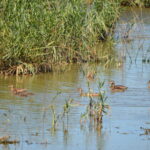
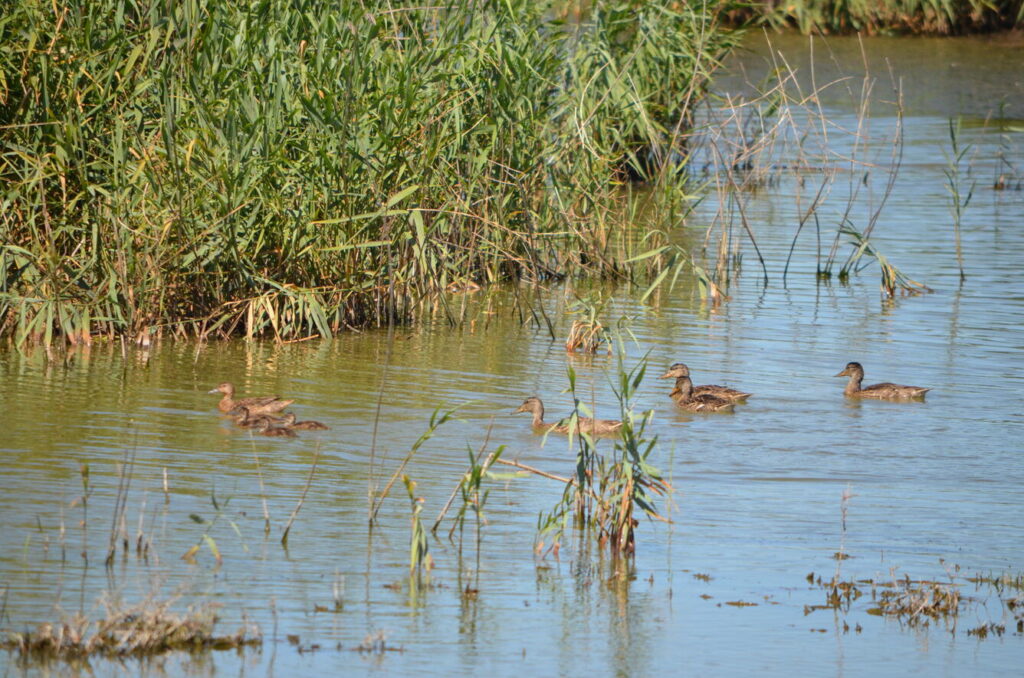
Photo: Ducks on the move through Suisun Marsh – Sarah Peterson, USGS