
Migratory Bird Joint Ventures Celebrate 40 Years of Conservation Work
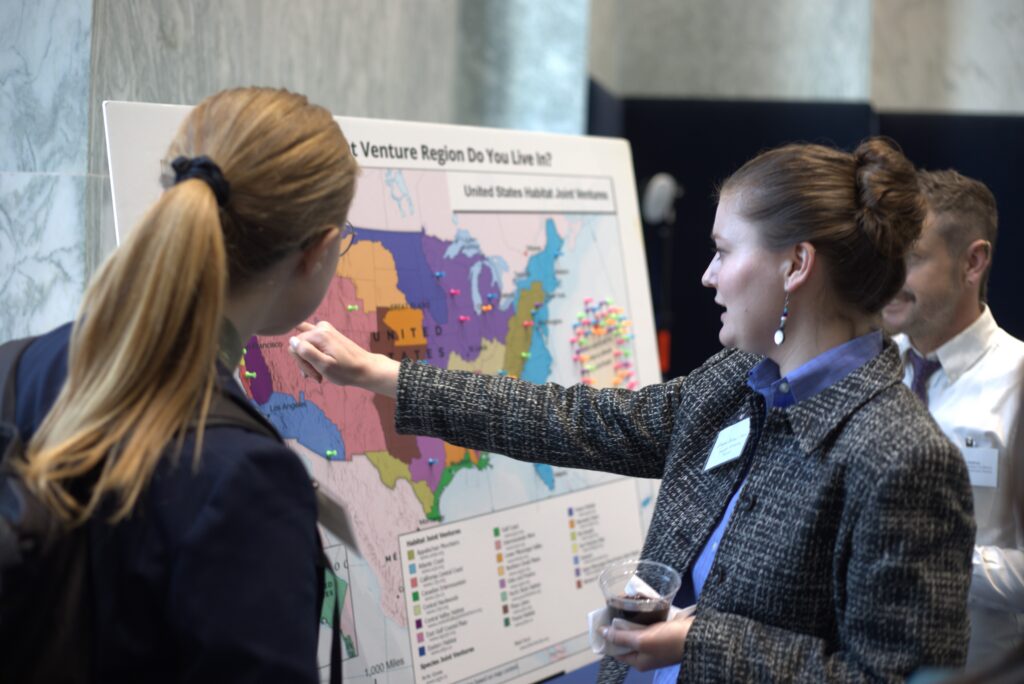
This year marks the 40th anniversary of the North American Migratory Bird Joint Ventures (MBJVs), a network launched by the 1986 North American Waterfowl Management Plan and now recognized as a leading model for cooperative wildlife conservation. To mark the milestone, the Association of Joint Venture Management Boards, Ducks Unlimited, American Bird Conservancy, and National Audubon Society hosted a reception in Washington, D.C. in February. More than 200 Joint Venture staff, board members, and partners gathered to celebrate four decades of collaborative conservation work.
Several organizations and individuals were honored at the reception with Conservation Champion Awards recognizing their long-standing commitment to the Joint Ventures. The event also featured the premiere of a new video highlighting the mission and vision of the Joint Venture network.
Several CVJV partners attended the D.C. reception. CVJV is one of 23 Habitat Joint Ventures operating across the United States, Canada, Indigenous Nations, and northern Mexico. Three Species-focused Joint Ventures round out the network, all working to advance the science needed to manage bird populations and the habitats they depend on.
CVJV itself is a partnership of 20 organizations, including federal and state government agencies, environmental non-profits, and a corporation, working to conserve and restore bird habitat in California’s Central Valley. That collaborative structure, with diverse partners coordinating around shared priorities, exemplifies the Joint Venture model the D.C. reception celebrated.
Over their 40-year history, Migratory Bird Joint Ventures have worked with more than 5,700 partners, including non-governmental organizations, public agencies, private landowners, Tribes, corporations, universities, and land trusts. Together, they have helped conserve more than 33 million acres of habitat across North America.
Watch the new MBJV video to learn more about what Joint Ventures are and why they matter.

Top image: A map at the reception showed the geographic location of all the North American Joint Ventures.