
Tracking Tricolored Blackbirds: New Technology Reveals Clues for Conservation
The tricolored blackbird, listed as a state Threatened Species, is one of California’s most imperiled birds. Found in marshes, grasslands, and agricultural fields, these songbirds form the largest breeding colonies of any landbird in all of North America. A hundred years ago, a single colony could span nearly 59 acres. But populations have declined more than 80 percent from the estimated population size of 2 to 3 million birds in the 1930s, largely due to wetland loss and changing agricultural practices. This blackbird is one of 38 bird species identified as “at-risk” in CVJV’s 2020 Implementation Plan. The tricolored blackbird is nearly endemic to California, breeding almost exclusively in the state and relying heavily on the Central Valley throughout the year.
Conservation efforts organized through the Tricolored Blackbird Working Group, formed in 2004 and coordinated by CVJV Management Board member Audubon California, have helped stabilize and then grow the population. In 2025 in the Central Valley, more than 200,000 birds were documented during the breeding season. This year, the largest single colony found so far has 29,000 birds. The working group brings together agencies, researchers, landowners, and conservation organizations, including CVJV, around a shared commitment to the species’ recovery.
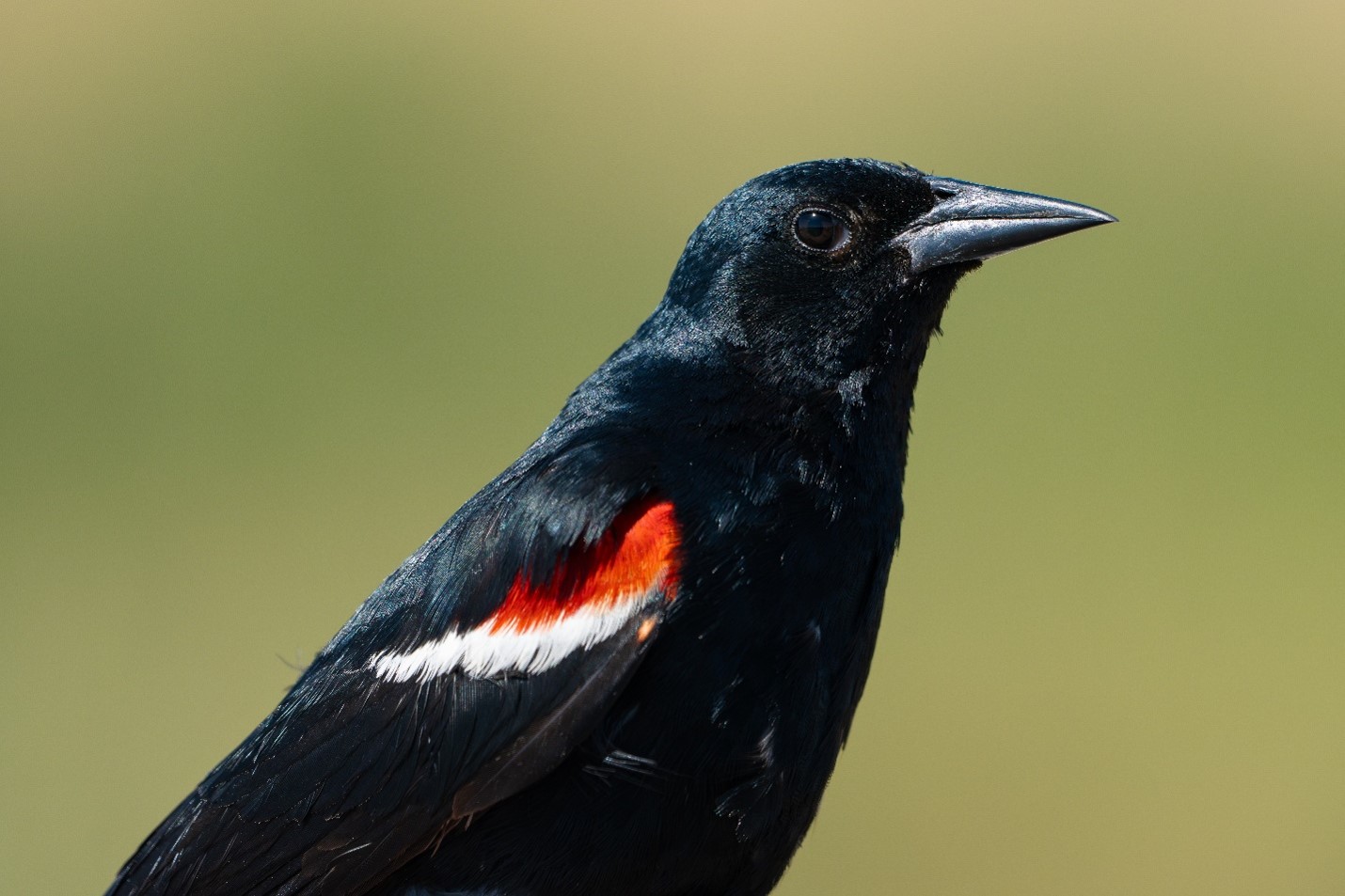
Most tricolored blackbirds now depend on private, working lands for nesting and foraging. Farms and ranches across the Central Valley play a critical role in the species’ survival, and protecting colonies requires building and maintaining strong relationships with agricultural landowners. Audubon California has worked closely with the dairy industry, the California Farm Bureau Federation, and with the USDA Natural Resources Conservation Service (NRCS) and California Department of Fish and Wildlife (CDFW), both of which also have a representative on the CVJV Management Board, to develop conservation incentives for farmers. The NRCS-administered Regional Conservation Partnership Program helps offset the costs farmers face when delaying harvest to allow tricolored blackbird chicks to fledge safely. Additionally, CDFW has also contributed funds to offset costs in years when economic conditions were particularly challenging.
Even as these collaborative efforts to protect nesting colonies produced real gains, scientists have noted that little is known about where tricolored blackbirds go after the breeding season. To fill that gap, Audubon California launched a tracking study in 2025, also funded by CDFW, tagging 104 birds with ultra-lightweight Motus tags and deploying a network of receiver stations across the landscape. Motus is a collaborative wildlife tracking system: each tagged bird emits a unique coded radio signal, and an array of receiver stations autonomously logs detections as birds pass within range. Those data are uploaded to a shared database, making it possible to piece together individual birds’ movements across broad geographic areas.
Between May 2025 and April 2026, the tagged blackbirds generated one million detections, offering an unprecedented window into the species’ year-round movements. An additional 130 birds were tagged this season. Read more about the project in this recent Audubon California article.
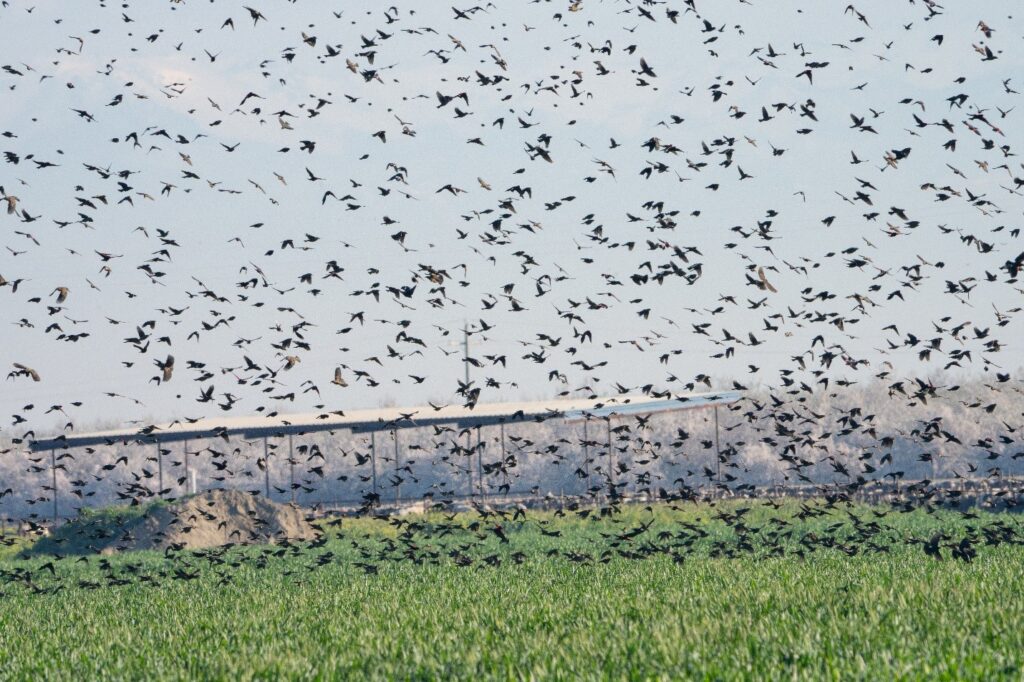
One of the study’s early findings highlights the importance of grasslands to this species. While tricolored blackbirds are often associated with wetlands and dairy farms, a large number of tagged birds congregated in Solano County’s rolling grazing lands and irrigated pastures in the fall. Grasslands, among California’s most imperiled ecosystems, provide critical foraging habitat rich in invertebrates. This finding adds urgency to efforts to protect and restore grassland habitat in the Central Valley as part of a comprehensive conservation strategy for the species.
The tracking data are also revealing connections between distant parts of the birds’ range. Birds that bred in the Sacramento Valley’s Colusa County last year were detected in Kern County in the southern San Joaquin Valley this spring, suggesting they may have bred there this year. This kind of cross-regional movement underscores the importance of protecting habitat not just at individual colony sites but across the full extent of the tricolored blackbird’s range.
The work is advancing through collaboration among multiple CVJV Management Board members and other partners. Point Blue Conservation Science supported station installation and tagging efforts. The Nature Conservancy provided field support for tagging. River Partners installed additional Motus receiver towers in the region, helping to capture bird movements across a wider area. Researchers at Southern Sierra Research Station and the San Diego Natural History Museum are tagging birds in other regions, and together these data will build a more complete picture of the species’ year-round distribution and habitat needs across California.
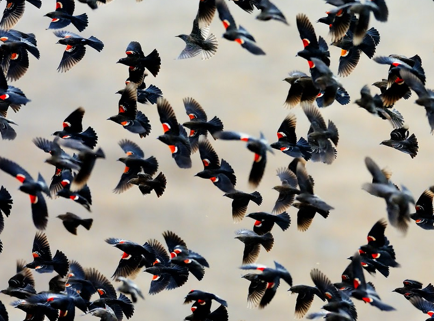
Top image: Tricolored blackbird flock, Jerry Ting