
Restoring Farmland, Reviving Wildlife: The Capinero Creek Project
In California’s San Joaquin Valley, a former dairy farm is being transformed into a thriving native habitat, a community classroom, and a model for what smart land stewardship can accomplish. The 467-acre Capinero Creek Restoration Project, a partnership between The Nature Conservancy (a CVJV Management Board member) and the Tule Basin Land & Water Conservation Trust, is one of the most compelling examples of what California’s Multibenefit Land Repurposing Program (MLRP) was designed to achieve.
The MLRP helps landowners and communities in the San Joaquin Valley transition farmland to other uses that reduce groundwater pumping, as required under California’s Sustainable Groundwater Management Act, while delivering additional benefits for wildlife and communities. The Capinero Creek project, spanning 467 acres near Pixley, has become a living laboratory demonstrating multiple possibilities for land repurposing and water conservation projects. CVJV Management Board members and partners including the U.S. Bureau of Reclamation, California’s Wildlife Conservation Board, River Partners, and the Tule Basin Land & Water Conservation Trust all have a hand in this project.
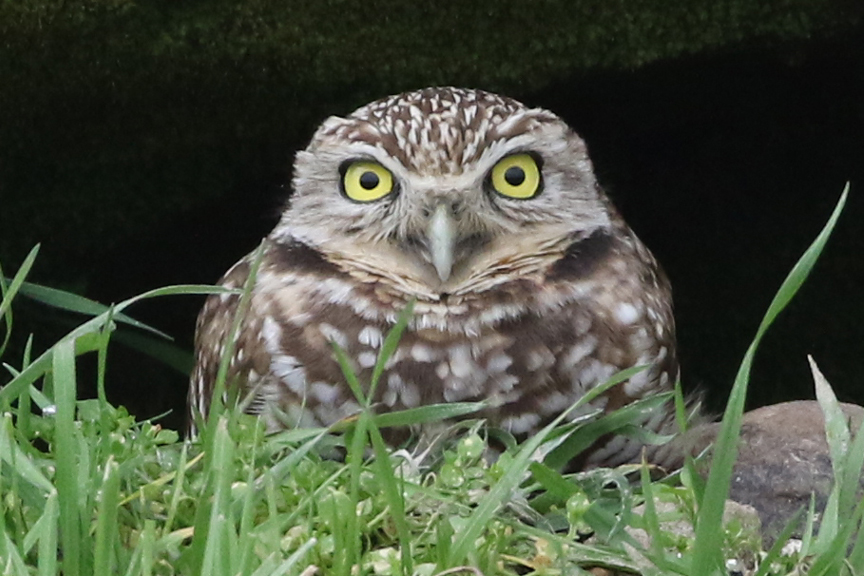
The restoration work at Capinero Creek focuses on establishing alkali scrub habitat, including native shrubs, grasses, and wildflowers that require far less water than non-native plants. Across 80 acres, groundwater pumping has dropped to well under 20 acre-feet per year. The ecological response has been encouraging. Among the species that have returned to the site are burrowing owls, identified as an At-Risk Species in CVJV’s 2020 Implementation Plan, along with raptors and kangaroo rats, a keystone species that shapes the landscape and supports the broader food web. The site has also seen early signs of recovery for two endangered species: the blunt-nosed leopard lizard, which turned up just six months after planting, and the crotch’s bumblebee. The project team is using wildlife cameras, acoustic monitoring, and DNA testing to track species distribution and document the benefits of active habitat restoration versus simply leaving land fallow.
The project has also become a living classroom. Students from Alpaugh High School have contributed to community science efforts, monitoring air, water, and soil quality as well as biodiversity on the site. Their research earned top honors at the Tulare County Science and Engineering Fair, and two students went on to win second place and college scholarships at the California Science and Engineering Fair.
The Capinero Creek project is a powerful example of how habitat restoration can deliver for birds and wildlife, communities, and future generations all at once.
Top image: Burrowing owl, Stephen Fettig