
The Lower Klamath Refuge Could Once Again Become a Vibrant Habitat for Ducks
Duck and geese populations on the Lower Klamath National Wildlife Refuge in Northern California went through one of the worst waterfowl die-offs on record in 2024. Then in 2025, they experienced a remarkable recovery, a sign of what’s possible when conservation is backed by action, investment, and partnership. Now these same populations are at grave risk again.
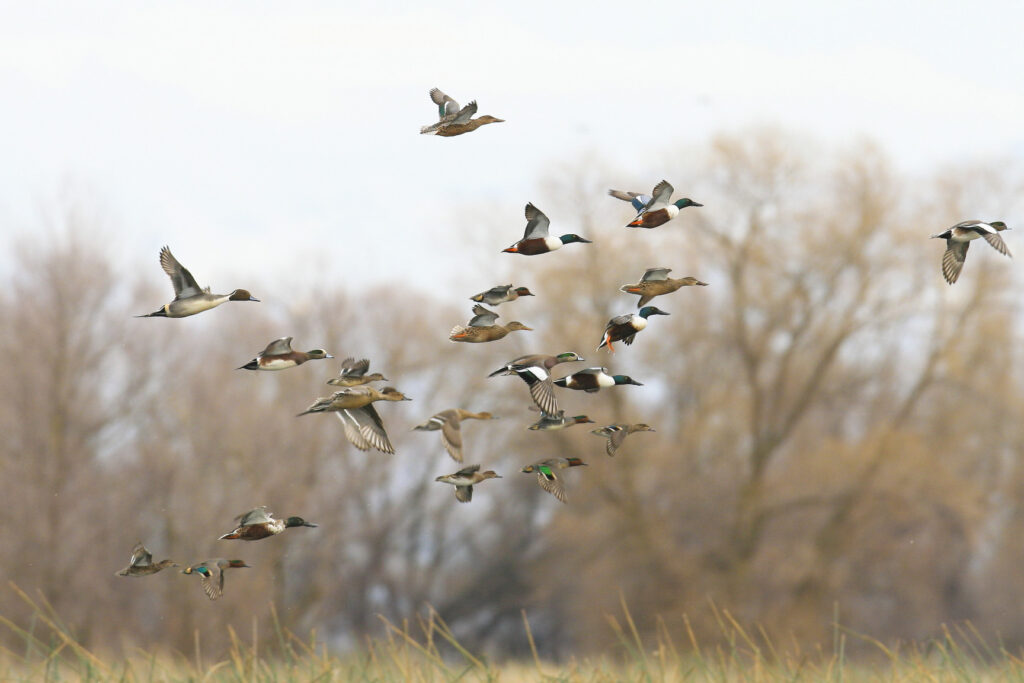
Historically the Upper Klamath Basin, straddling the Oregon-California border, was akin to the Central Valley in its abundance of migratory waterfowl (ducks, geese, and swans) and other waterbirds (such as terns, herons, grebes, pelicans, and others), providing keystone breeding and migratory habitat along the Pacific Flyway for millions of birds.
The 50,000-acre Lower Klamath National Wildlife Refuge, just south of the Oregon border, was established in 1908 as the country’s first migratory waterfowl refuge. This refuge became part of the Klamath Basin National Wildlife Refuge Complex, comprising six refuges on both sides of the Oregon-California border, that now encompasses 192,000 acres of wildlife habitat.
Recurring drought and multiple interests competing for limited water supplies has left migratory birds with limited available habitat during dry years. Innovative solutions are needed to help these birds and bolster the multiple benefits a naturally functioning Klamath Basin brings to communities. Many of the birds that use the Central Valley for breeding, wintering, and/or migration are the same birds using the Lower Klamath National Wildlife Refuge and other habitat in the Upper Klamath Basin. Finding ways to deliver adequate water to these lands and support waterbird populations there is critically important to the CVJV’s conservation efforts.
The Klamath Basin goes through natural cycles of drought, but the droughts have become more frequent and more severe over recent decades. When water is scarce, not only do waterbirds have less available habitat, they also become crowded together, providing the perfect conditions for diseases such as botulism to spread and devastate whole populations. In dry years, there’s simply not enough water to go around. Unlike some agricultural producers and local tribes, the refuges have no guaranteed water allocation.
In some years, the Klamath wildlife refuges run completely dry by the end of summer. In 2024, more than 100,000 birds died in the Klamath Basin.
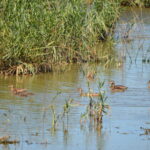
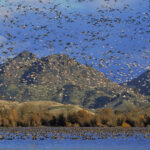
The following year, due to the efforts of CVJV Management Board member California Waterfowl Association and many other partners, the Lower Klamath NWR was flooded at scale for the first time in decades. A duck desert was transformed into functioning habitat. Ducks reproduced at levels not seen since the early 1990s. Botulism declined. Flocks stretched across the horizon. These efforts show that focused conservation action can help habitat recover and waterfowl populations rebound.
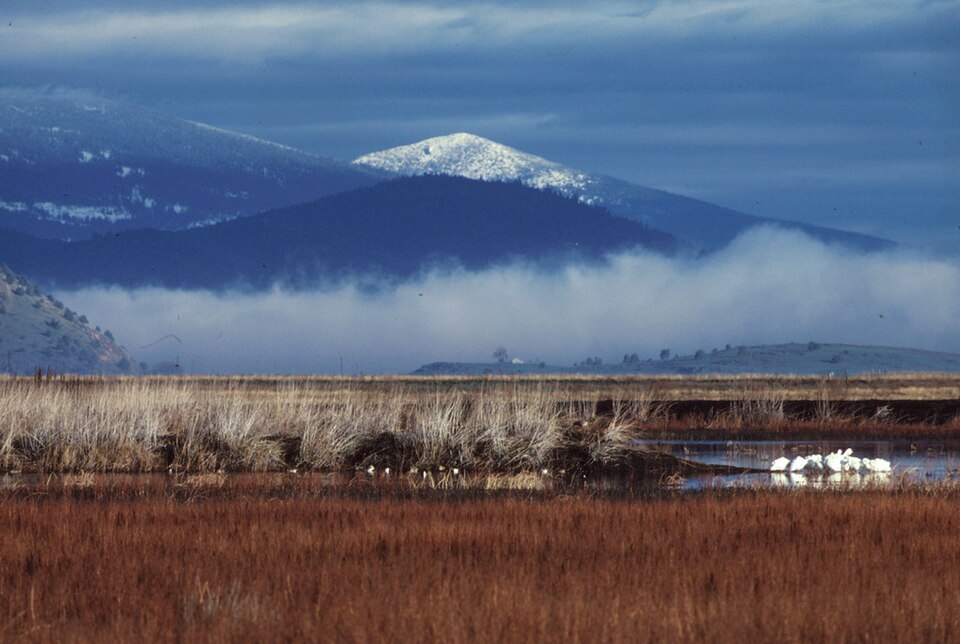
Lower Klamath National Wildlife Refuge – USFWS
Agricultural producers, tribes, and other stakeholders in the region are working hard on creative solutions. For example, several family farms and ranches participate in voluntary programs that provide habitat on private land for migratory birds and other wildlife.
One promising solution is the Tule Lake Flow-Through approach. Rather than treating the region’s wildlife refuges as static storage ponds, flow-through keeps water moving continuously from Upper Klamath Lake through the basin’s network of canals, drains, and pumping stations, across agricultural lands, through the Tule Lake and Lower Klamath refuges, and back to the Klamath River. By mimicking the basin’s natural hydrology, this approach helps keep the refuge wetlands functioning even in dry years.
For the millions of birds that depend on these lands, flow-through means more reliable habitat and far less of the crowding that lets botulism spread. Flow-through also benefits farmers, communities, and native fish, while improving water quality and recharging groundwater.
In addition to the multiple benefits described above, providing adequate water supplies for the refuges also supports local economies through the significant dollars brought in by waterfowl hunters. As the Klamath Basin faces increasing incidence and severity of droughts, the region needs long-term solutions and a long-term commitment to protect these waterbirds and their habitat.
Watch this 5-minute video from California Waterfowl, From Dust to Ducks: Fragile Hope for Klamath for more information.
Top image: USFWS