
Studying Bats in the Central Valley
Bats depend on many of the same habitats that support migratory birds in the Central Valley, such as riverside forests, grasslands, wetlands, and even agricultural lands. Because they are nocturnal, they are rarely seen and often misunderstood, but they save farmers billions of dollars a year by eating crop pests.
Bats are also remarkably diverse. Of the roughly 6,500 known mammal species on Earth, about 1,500 are bats. That means one in every four mammal species is a bat, making them second only to rodents in mammal diversity. Yet scientists are still learning how they live and what they need to thrive.
CVJV partner organization River Partners has launched a study of bat activity at restoration sites across Merced and Stanislaus counties in the Central Valley. River Partners deployed 24 autonomous recording units at eight sites last summer to capture bat activity over 30 nights. The monitors record echolocation calls, the high-frequency pulses bats emit to navigate and locate prey in the dark, at ultrasonic frequencies typically beyond the range of human hearing. Each bat species produces distinct acoustic signatures, allowing researchers to identify species without ever catching or handling them. This is a significant advance: methods that once required capturing bats in nets have given way over the past decade to these far less invasive digital recording techniques.
The study is part of River Partners’ Before-After Control-Impact (BACI) research, which tracks ecological conditions at sites before and after restoration. By comparing bat use at sites already restored with sites slated for future restoration, River Partners will gain insight into how habitat improvements benefit bat communities over time and how to design future projects to maximize those benefits.
Why does this matter for the broader ecosystem? For one thing, nearly all bat species in the United States eat insects. This makes bats essential to maintaining ecosystem balance, including natural pest control. According to the U.S. Geological Survey, bats save farmers at least $3.7 billion each year in the U.S., possibly much more, by consuming crop-damaging insects, reducing the need for pesticides and limiting crop losses.
Bats are connected to everything else in an ecosystem. Protecting them and their habitats also helps native plants, insects, and the migratory and breeding birds that are central to CVJV’s mission. By protecting and restoring migratory bird habitat in the Central Valley, CVJV and our partners are also assuring the survival of these elusive, indispensable creatures.
One great place to observe bats in the Central Valley is the Yolo Bypass Wildlife Area, where people can observe one of the largest colonies of Mexican free-tailed bats while also enjoying views of huge flocks of waterfowl and other birds in wetlands and agricultural fields. Read more about River Partners’ bat research on the River Partners website.
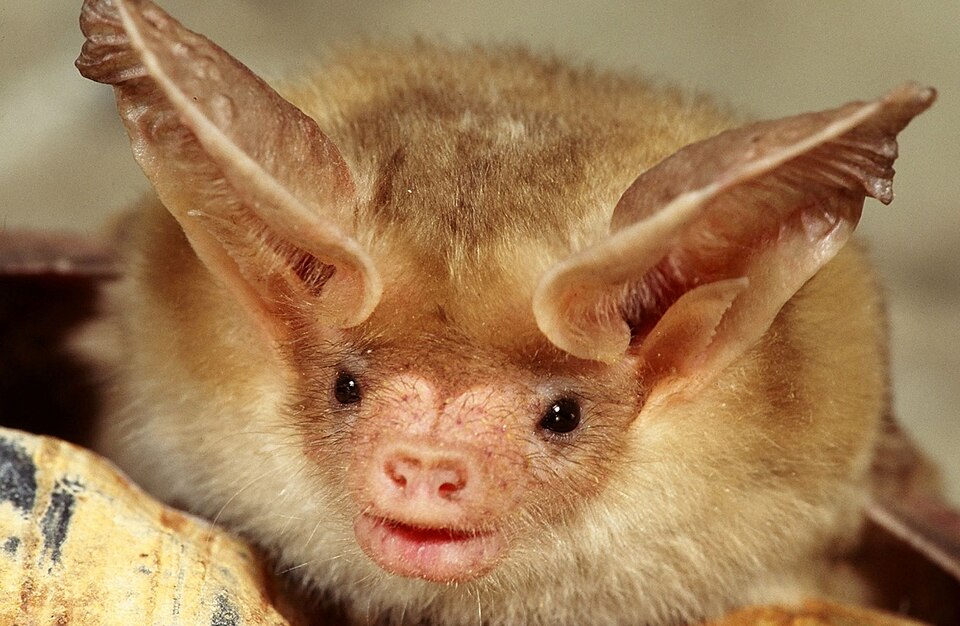
Top image: Pallid bat, the State Bat of California – National Park Service